
Welcome to Mindset Moments™
A community-wide program that builds character, resilience, and relationships one short conversation at a time
Want to bring Mindset Moments™ to your school, club or youth mentoring organization?
From the Classroom to the Dinner Table
The MacDermott Method Mindset Moments program combines character education
and resilience training in a format that builds connection between students, educators and
parents and promotes a sense of belonging throughout the entire school community—
from the classroom to the sports field to the dinner table.
Finally, a program that includes parents!
Motivating Minds. Molding Futures.
Mindset Matters
Our mindset—how we think about ourselves and our ability to have a positive impact in our own lives and in the world—either sets us up for success or limits our ability to achieve our potential.
Through “Skill of the Week” conversation prompts students engage in short, small group conversations that invite them to reflect on the aspects of character, relationships and resilience that help them build empowered mindsets, create strong support systems and be responsible members of their communities.
Making School Cultures More Open and Safe
Join us as we engage in a powerful new program that not only teaches resilience and
builds character but also fosters authentic connection by getting people talking to each
other in ways that matter.
In only 10-15 minutes per week, organizations can create a culture of good communicators
and identify students who are struggling and need more intensive resources.
When people are better communicators the community is safer—individuals reach out for
help when they need it (for themselves), they talk to caring adults when they are worried
about another student, and they directly address students they are worried about rather
than avoiding them.
Watch this 3-minute video
to learn how easy it is to implement Mindset Moments™.
An Evidence-Based Curriculum
Hi, I'm Kristin MacDermott. I'm a licensed marriage and family therapist, resilience expert, and creator of the MacDermott Method.
Mindset Moments™ is based on a resilience-training curriculum that has been validated in 4 studies with researchers from The Duke Clinical Research Institute, published in peer-reviewed journals, and proven to promote clinically significant improvement in key mental health and resilience measures, including distress, anxiety,
depression, PTSD, and self-efficacy.
Versions of the curriculum have been used by a diverse array of organizations, including Navy SEALs, the LAPD, 20 hospitals across the country, including Duke Health and the National Institutes ofHealth, the National Guard, and the Veterans Administration, and they have been funded by The National Cancer Institute, Navy SEAL Family Foundation, Pfizer, Genentech, Amgen, Livestrong, Duke Cancer Institute, Colorado Health Foundation, Women’s Cancer
Research Fund, the Aspen Center for Integral Health, Susan G. Komen Foundation, the National Comprehensive Cancer Network, and the Annenberg Foundation.
Our mission is to bring resilience-training to every child in America through our mentoring and parenting programs. In doing so, I hope to not only empower the children but also strengthen their families.
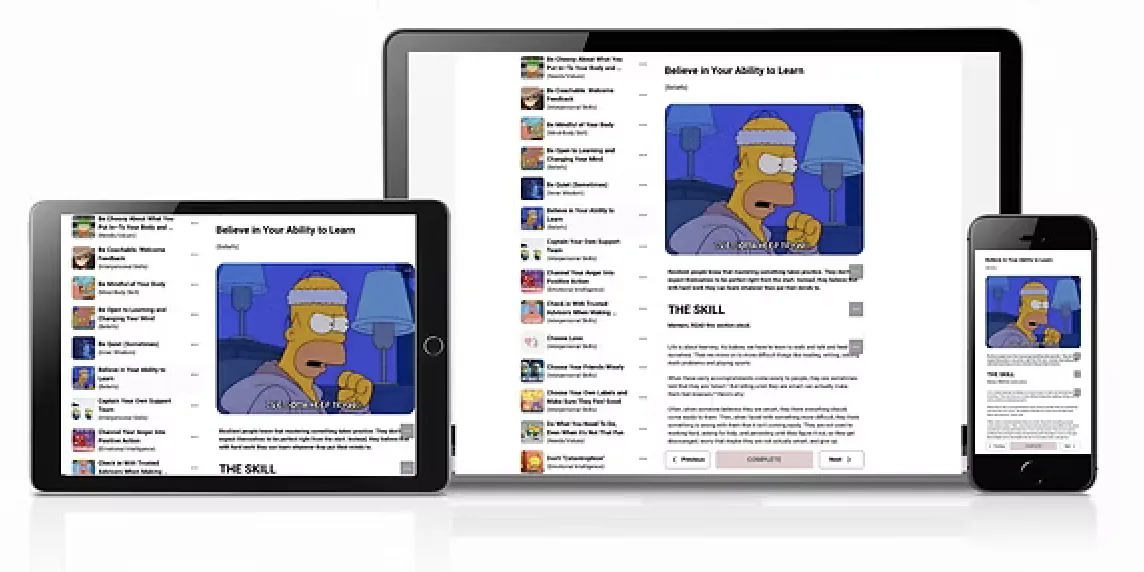
Everything you need in the palm of your hand
No training or preparation necessary!
We provide "Skill of the Week" conversation prompts that not only build character and resilience but also build connection.
When students have open, authentic,
meaningful conversations with caring adults, peers, and their parents it fosters a sense of belonging and creates a culture of caring and of good communicators.
Mentors & Parents,
Watch this before you use Mindset Moments™
One more 3-minute video is all it takes to get started!
Prefer to READ the How To Use
Instructions?
Check out the last section of this page.
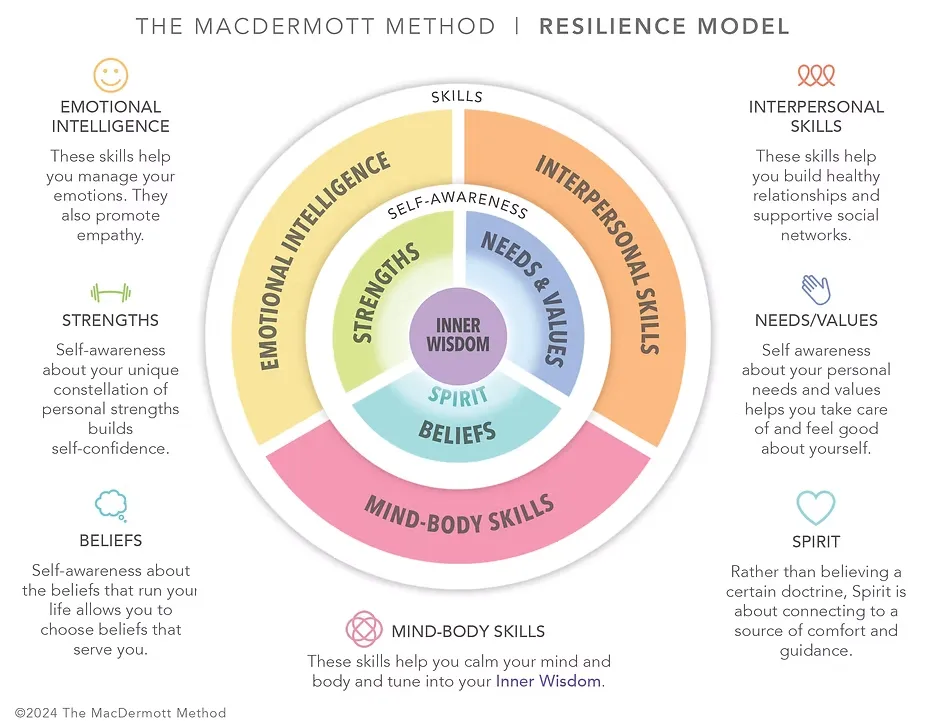
The MacDermott Method resilience model builds an empowered mindset by developing skills across eight
categories. These categories of skills can generally be understood to relate to character, relationships and
resilience as follows:
Character: Who am I?
What are my personal strengths?
What are my personal values?
What do I believe about myself, my worth, and my place in the world?
Relationships: How will I show up in my relationships and in my community?
Do I have the interpersonal skills to develop and maintain supportive relationships?
Can I balance my needs with the needs of others?
How do my beliefs shape how I show up in relationships and the community?
Resilience: How will I overcome challenges and adversity?
Do I have the emotional intelligence to take care of myself?
Can I use mind/body awareness and skills to take care of myself?
Can I trust my own inner wisdom to make good decisions?
Do I get inspiration from connection to something bigger than myself, whether that’s nature, community, or
spirituality.
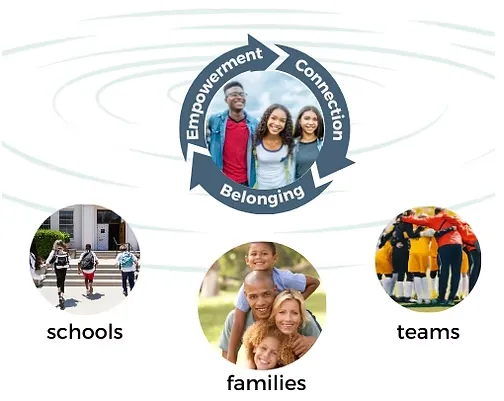
Help Us Create A
Resilience Ripple!
Together we can break the cycle of
disconnection and disempowerment by
starting a new kind of conversation.
The more adults in your child’s life having
character and resilience-building
conversations with them, the better.
Let's take the conversation out of the
classroom, onto the field, and home
to the dinner table!
RESILIENCE RIPPLE
How to Use
When you receive the "Skill of the Week," simply:
1. PROJECT the skill or pass your phone so kids can see the GIF.
2. READ the "Read-Aloud" section. (Seriously, don't put it into your own words. Just read it.)
3. ASK one of the questions.
4. LISTEN and invite all students to share. (The point is for the kids to talk and the adults to listen.)
5. SHARE something that makes you relatable. (After the kids share, it's your turn. Share, don't teach.)
Do you really mean to read it verbatim? Should I put it into my own words?
Yes, just read it. The goal is to get to the questions. No need to put it into your own words, as that takes precious time away from the conversation.
How much time should each conversation take?
10-15 minutes is the minimum for a group conversations, though some organizations allocate more time. Parents can have one-on-one conversations in much shorter time.
How many students should be in a conversation?
Ideally, the group size won't be larger than 12-15 students per mentor. This ensures that no one can "hide." The goal is for everyone to participate.
How does the program help organizations identify students who need a more intensive level of resources?
Keeping the group size small allows mentors to know which students are not engaging, so they can follow up with those students and offer more resources.
How many of the questions should I ask?
Sometimes the whole time can be filled with one conversation prompt. Other times you might get through several of them.
As the mentor, what should I share?
It's totally up to you. Keep in mind, though, that we bond through our vulnerability, and it's powerful for students to hear that the authority figures in their lives have struggled with some of the same challenges they face.
Who can be a "mentor?"
Educators, coaches, counselors, advisors, and even older students who have been through the program can facilitate the conversations. We call them mentors because they are acting as supportive advocates as opposed to "teaching."
© 2024 MacDermott Method


